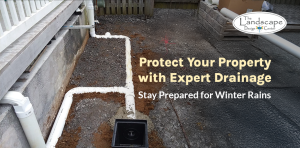

Spotting a yard drainage problem
Puddles after a storm? A drainage problem rarely announces itself with a flood. It starts quietly: a soggy corner, a mossy patch, a walkway that shifted after winter.
Catch it early and the fix stays small. Ignore it and the same drainage problem can stress your lawn, your hardscape, and even your foundation.
Water always tells you where it wants to go. A good design listens before the yard keeps score.
That is how our designers think on every site visit, from Edgewater to Annapolis and the surrounding counties.
What is a yard drainage problem?
A yard drainage problem appears when water moves too slowly, pools in the wrong spot, or heads toward structures instead of away from them.
Much of Central Maryland sits on dense clay soil that drinks slowly and sheds quickly. Add freeze-thaw cycles and heavy seasonal rain, and even a carefully built grade can fail.
The short answer: a drainage problem is a water-movement problem. Fix the movement and the symptoms fade.
6 Signs your yard has a drainage problem
Here are the signals we watch for during a walk-through. Count how many show up in your yard.
1. Standing water that will not drain
Puddles lingering 24 to 48 hours after rain are the classic sign of a drainage problem.
Water should soak in or sheet away, not sit and shimmer.
2. Soggy, spongy soil
If your boot sinks in and the lawn feels like a wet sponge, the soil is holding water it cannot release.
Left alone, this quiet drainage problem turns into thin turf and bare spots.
3. Erosion trenches and exposed roots
Little gullies in mulch beds, or soil showing around roots, mean water is moving with force.
That velocity is a drainage problem signature.
4. Sinking or cracking hardscapes
A patio that rocks, a walkway with new cracks, or settling steps often trace back to a drainage problem washing out the base.
Freeze-thaw then widens the damage.
5. Water marks near the foundation
Splash-back, damp spots, or mulch lines on siding suggest roof runoff landing too close to the house.
Downspouts are usually involved.
6. Moss, Fungus, and Struggling Plants
Moss loves what your lawn hates: constant moisture.
Mushrooms after every storm and yellowing shrubs complete the picture.
One sign deserves a closer look. Three or more usually mean the yard drainage problem is active, not occasional.
What causes a drainage problem in Maryland’s yards
Most drainage problem calls we receive share a few recurring culprits:
- Flat or negative grading that slopes water toward the house
- Compacted clay soil that slows infiltration
- Short or mis-aimed downspouts dumping roof water at the foundation
- Beds and hardscapes acting as dams, blocking natural sheet flow
- Neighboring runoff arriving faster than the yard can absorb it
None of these means the yard is doomed. They are physics, and physics can be redirected.
How to fix a yard drainage problem

The right fix depends on where water comes from and where it can safely go. A site evaluation decides that, never a guess. Common tools in our playbook:
Regrade and shape the soil
Sometimes the answer is gentle: regrading to about one inch of fall per foot near the house, or carving a shallow swale that guides water toward a planted area.
Extend and redirect downspouts
Carrying roof water a few extra feet away, underground when possible, is one of the cheapest wins in drainage work. Mis-aimed roof water is the hidden half of many a drainage problem, and redirecting it also protects beds from washout.
Install a french drain or catch basin
Where water collects with nowhere to go, a perforated pipe in a gravel trench can quietly relocate it.
Plant a rain garden
On the softer side, a designed rain garden or bioswale can drink the overflow. Our green projects team shapes these to work hard and look good doing it.
The best fix is rarely one product. It is grading, drainage, and planting working as a single system.
10-Minute drainage self-check
Grab an umbrella during the next steady rain and note:
- Where puddles form, and how long they stay
- Which way water sheets off beds, paths, and the patio
- Whether downspouts splash or overflow
- Any new cracks, settling, or erosion lines
- Moss or fungus hotspots
Photograph everything. Future-you, and your designer, will be grateful.
When to call a drainage professional

If water ever moves toward the foundation, or a fix you tried did not hold, bring in a professional. A trained eye reads slope, soil, and runoff patterns in a single visit.
The Landscape Design Center has been untangling drainage problem cases across Central Maryland since 1974, pairing design with in-house installation. See a real project in our drainage renovation case study in Annapolis.
Every project starts with evaluation through our drainage and grading services, not with a preset product.
Professional yard drainage service in Maryland
A yard drainage problem is easier to fix the earlier it is caught.
Schedule a consultation or call 410-956-5292, and let a designer read your yard’s water story, guided by our design-build process from first call to final planting.
Frequently Asked Questions about signs your yard has a drainage problem
1. How quickly should puddles drain after rain?
Most lawn areas should absorb or shed rain within a day. Standing water after 48 hours points to a drainage problem worth checking.
2. Can a drainage problem damage my patio or walkway?
Yes. Water trapped under a hardscape base expands and contracts with freeze-thaw, which can crack and settle pavers. That is why paver patio installation should always plan for water first.
3. Will regrading alone fix a yard drainage problem?
Sometimes. When soil type or runoff volume drives the issue, regrading works best combined with drains, swales, or a rain garden.
4. Do you handle drainage work in Annapolis?
We do. Our crews serve Annapolis, Edgewater, and much of Central Maryland, within about an hour of our Edgewater office.